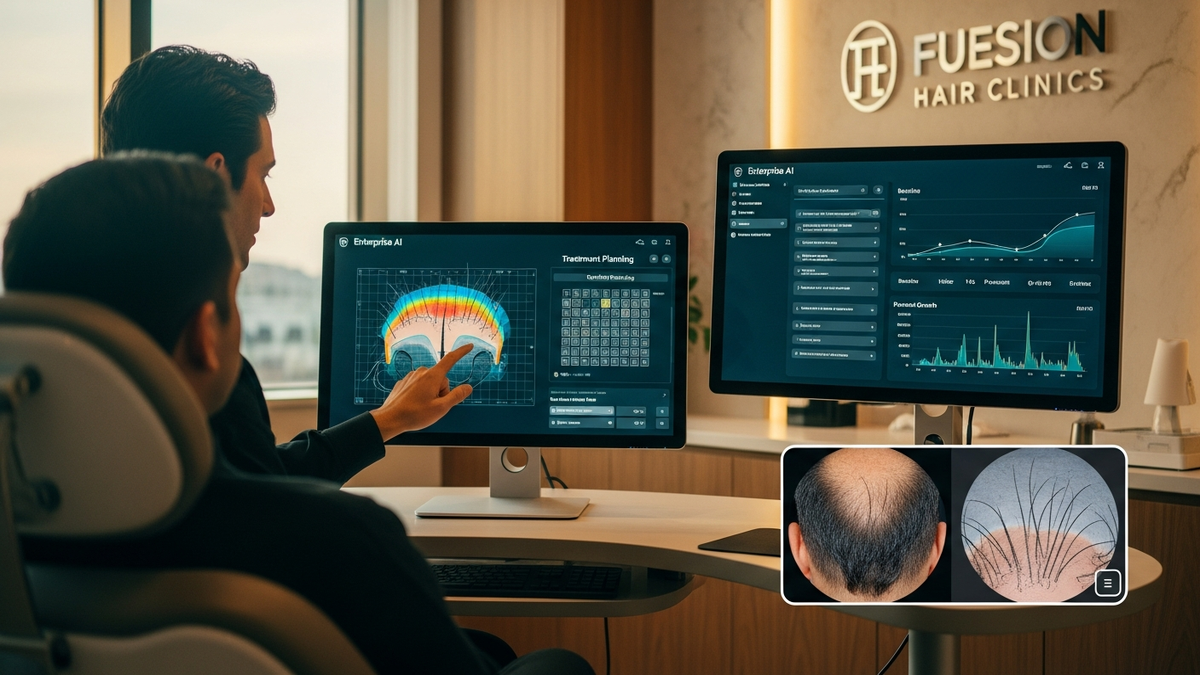
Hair loss is rarely a single-cause problem. DHT sensitivity, inflammation, follicle aging, scalp microbiome shifts, nutritional gaps, and lifestyle factors can overlap—often differently from person to person. That’s why FUEsion Hair Clinics has embraced a new standard of care: Enterprise AI paired with clinical expertise and genetics-informed protocols. In this guide, we’ll explain what Enterprise AI means in a hair restoration context, how it supports personalized treatment planning, and how it may complement both non-surgical and surgical options.
Quick note: This article is educational and cannot replace a medical evaluation. Your best plan depends on your pattern of hair loss, scalp health, and medical history.
What Is Enterprise AI in Hair Restoration?
Enterprise AI refers to AI systems designed for real-world healthcare workflows—secure data handling, standardized clinical decision support, and scalable interpretation across many patients. Unlike consumer AI tools that may provide generic advice, Enterprise AI is typically integrated into systems that prioritize:
- Clinical governance (protocols, validation, and monitoring)
- HIPAA-secure data handling and compliance
- Evidence-based pattern recognition using research-backed datasets
- Actionability—turning insights into concrete recommendations (e.g., topical regimens, nutraceutical strategies, device protocols, and medication pathways when appropriate)
At FUEsion Hair Clinics, the goal isn’t “AI replacing doctors.” It’s AI enhancing precision—helping clinicians interpret complex biological signals so that treatment can be tailored more intelligently.
Why Hair Loss Needs Precision—Not One-Size-Fits-All
Common hair restoration approaches—like relying solely on minoxidil or using a standard supplement stack—can help many patients. But they don’t address the full biological picture. Two people may both have androgenetic alopecia (pattern hair loss), yet respond differently because their genetic variants influence:
- DHT metabolism and androgen sensitivity
- Inflammatory signaling in the scalp environment
- Oxidative stress and mitochondrial function
- Follicle aging pathways
- Transport and response to therapies (including laser and topical absorption dynamics)
Enterprise AI helps clinicians interpret these overlapping variables to design more targeted, medically appropriate plans.
How Enterprise AI Supports Personalized Hair Planning
In a precision hair-loss program, Enterprise AI typically supports four phases: data collection, analysis, interpretation, and protocol building.
1) DNA Collection: Building the Biological Baseline
FUEsion Hair Clinics’ genetics-informed approach uses a simple at-home saliva collection process. This step helps create a baseline for personalized insights without requiring invasive procedures.
From there, a CLIA-certified lab can analyze relevant hair-related genetic markers (SNPs) using advanced sequencing technology.
2) Genetic Analysis: Identifying Hair-Related SNPs
Hair intelligence programs may analyze 200+ hair-related SNPs associated with pathways linked to androgen sensitivity, DHT metabolism, follicle aging, oxidative stress, inflammation, and treatment responsiveness. This is where Enterprise AI becomes especially useful: it doesn’t just list variants—it helps interpret what they may mean for real-world outcomes.
3) AI Interpretation: Turning Variants Into Treatment Logic
Enterprise AI can use machine learning algorithms to compare a patient’s genetic profile against global research databases. The output is not a diagnosis; it’s decision support—a structured, research-backed framework clinicians can use to tailor protocols.
4) Personalized Protocols: What Changes in Your Care Plan
A personalized plan may include combinations of:
- Genetically informed nutraceuticals (e.g., DHT-supporting ingredients, micronutrients, and antioxidant support)
- Custom compounded topicals when clinically appropriate (for example, finasteride/minoxidil combinations under medical supervision)
- Oral medications when indicated and prescribed by a qualified clinician
- Device-based protocols such as laser hair therapy, optimized sessions, and adherence planning
- Scalp inflammation and oxidative stress strategies tailored to risk pathways
Importantly, these components are typically adjusted over time based on progress and tolerability.
Enterprise AI Meets Clinical Expertise: What It Looks Like in Practice
Here’s how the system can translate into meaningful clinical improvements. While every patient is unique, genetics-informed protocols can help explain why certain strategies work better for some people than others.
Example: Faster Growth and Improved Hair Quality
One patient experience (reported by program participants) highlighted how variant analysis informed a customized nutraceutical protocol and genetically matched gentle shampoo formula. Over 16 weeks, the patient reported:
- 40% faster growth rate
- Improved hair quality
- Genetic match: 88%
Example: Reduced Scalp Inflammation and Crown Regrowth
Another participant described how inflammatory gene variants helped guide an anti-inflammatory approach. Over 20 weeks, the reported outcomes included:
- 75% reduction in scalp inflammation
- Significant regrowth in crown
- Genetic match: 91%
Example: Optimizing Laser Response
Hair restoration isn’t only about medications. For some patients, laser hair therapy response can vary. One participant reported that variant analysis helped explain poor response to standard laser therapy, prompting an optimized 850nm protocol and extended sessions. Over 14 weeks, the reported results included:
- 85% improvement in hair thickness
- Optimal laser response
- Genetic match: 96%
These examples illustrate the broader concept: Enterprise AI can help clinicians choose and optimize interventions more intelligently—especially when biology is complex.
Where Surgical Hair Transplant Fits Into an AI-Optimized Plan
Surgical options can be life-changing for the right candidate, but the success of hair transplant outcomes often depends on both procedural technique and post-op and ongoing medical management.
FUE and Other Transplant Strategies
At hair restoration clinics like FUEsion Hair Clinics, common surgical approaches may include:
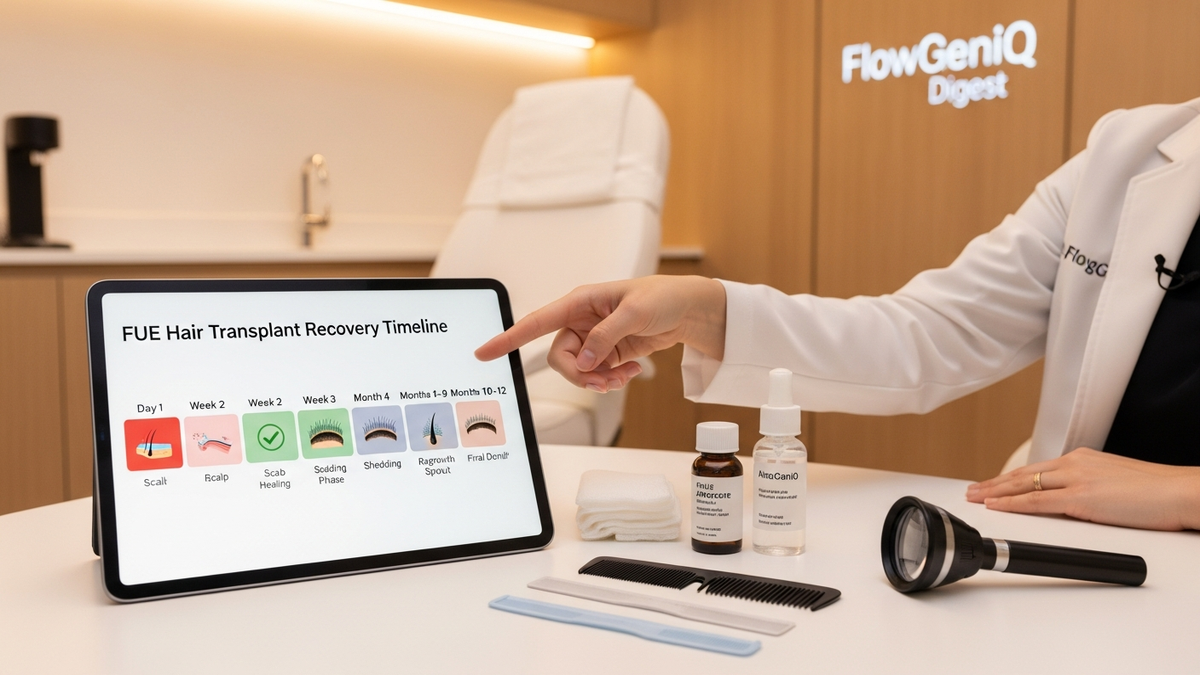
- FUE (Follicular Unit Extraction): harvesting individual grafts for natural placement
- Strip-based harvesting (FUT): in select cases where appropriate
- Hybrid strategies: combining graft sources or pairing surgery with intensive medical care
Enterprise AI can support surgical planning indirectly by helping clinicians:
- Assess readiness for surgery and likely progression risk
- Identify pathways that may affect healing, inflammation, and ongoing follicle support
- Standardize follow-up monitoring goals and adherence plans
Non-Surgical Treatments That Complement Transplant Results
Even after a successful transplant, ongoing care can help protect existing hair and improve overall density. Enterprise AI-informed protocols may include:
- Topical therapies (including compounded options where appropriate)
- Oral medications when clinically indicated
- Laser hair therapy with optimized dosing and session structure
- Scalp-focused nutraceutical and anti-inflammatory strategies
Enterprise AI and Patient Experience: Better Communication, Better Adherence
Precision medicine isn’t only about the science—it’s also about execution. Enterprise AI can help clinics improve patient experience by:
- Clarifying “why” behind a regimen, which can improve adherence
- Supporting structured follow-up check-ins
- Reducing guesswork in protocol selection
- Standardizing documentation for continuity of care
Some AI applications in healthcare and operations are also evolving quickly. For example, AI tools are increasingly used for workflow support and patient communication. If you’re curious about how AI systems are deployed in business settings, you may find references like ai receptionists and ai interns for businesses interesting—though these examples are not a substitute for medical care.
What Makes a Genetics-Informed Hair Program Different?
Many hair-loss products market themselves as “personalized,” but true personalization requires more than a quiz. A genetics-informed program can provide:
- CLIA-certified lab analysis for genetic testing, when available
- HIPAA-secure handling of patient data
- Research-backed interpretation rather than generic recommendations
- Ongoing support to adjust protocols as you respond
How Success Is Measured
Hair restoration outcomes should be evaluated over time. Common metrics include:
- Changes in hair shedding
- Visible density improvements
- Hair diameter/thickness
- Regrowth in specific zones (temples, crown, mid-scalp)
- Scalp comfort and inflammation reduction
- Adherence and tolerability of therapies
Enterprise AI in the Broader Health Context: The Hair-Scalp System
Hair health is tightly linked to systemic wellness. That’s one reason many precision clinics treat hair as part of a larger biological network—sleep, stress response, metabolic health, inflammation, and oxidative stress.
Inflammation and Oxidative Stress: Two Common Threads
Inflammation can affect scalp microenvironments, while oxidative stress can influence follicle resilience. Enterprise AI-informed protocols may help clinicians select targeted strategies that address these pathways rather than only stimulating growth superficially.
Energy Production and Cellular Support
Cellular energy pathways can influence how follicles respond to interventions. In some program experiences, variant analysis helped align laser therapy protocols with expected response patterns—supporting thickness improvements.
Choosing the Right Program at FUEsion Hair Clinics
Not every patient needs the most intensive plan. Many people start with a foundation program and then scale up based on goals, budget, and clinical response.
Potential Program Pathways (Non-Surgical + Surgical Support)
While your clinician will recommend the best approach, typical pathways may include:
- Starter programs for those who want to begin with genetic insights and foundational hair health support
- Core programs for active treatment and ongoing optimization
- Concierge-style programs for patients seeking maximum support, multi-modality care, and closer coordination
If you’re considering surgery, a genetics-informed plan can also help determine readiness and establish a long-term maintenance strategy to protect results.
Frequently Asked Questions (FAQ)
Is Enterprise AI actually used for hair restoration decisions?
In a precision clinic setting, Enterprise AI is typically used to support interpretation of complex data (including genetics) and to help clinicians translate that information into structured, evidence-based protocols. It does not replace medical judgment.
Does genetic testing guarantee hair regrowth?
No. Hair restoration depends on multiple variables: degree of miniaturization, duration of hair loss, scalp health, adherence, and individual response to therapy. Genetic insights can improve the likelihood of choosing the right strategy, but outcomes vary.
How long does it take to see results with a personalized hair protocol?
Hair cycles take time. Many patients evaluate progress over 12–24 weeks, with more meaningful density changes often assessed at 4–6 months or longer. Your clinician will set expectations based on your pattern and baseline findings.
Can Enterprise AI-informed care complement a hair transplant?
Yes. Surgical results often benefit from ongoing medical management and scalp support. A genetics-informed plan can help guide maintenance strategies before and after procedures such as FUE (and other surgical approaches when appropriate).
Is genetics-informed hair care safe?
Safety depends on the specific therapies used and your medical history. Prescription medications, compounded topicals, and device protocols should be overseen by qualified clinicians. Your plan should be individualized to reduce risk and improve tolerability.
CTA: Start Your Enterprise AI-Optimized Hair Health Plan at FUEsion Hair Clinics
If you’re tired of guessing what will work for your hair loss, consider a precision approach that pairs clinical expertise with Enterprise AI interpretation and genetics-informed protocols. At FUEsion Hair Clinics, we focus on actionable planning—so your regimen is built around your biology, your goals, and your timeline.
Next step: Schedule a consultation to discuss your hair loss pattern, scalp health, and whether a genetics-informed protocol (with non-surgical care and, when appropriate, surgical options like FUE) is right for you.
Medical Information Disclaimer
This content is provided for general educational purposes only and reflects the clinical experience and protocols followed at FUEsion Hair Clinics. It is not a substitute for professional medical advice, diagnosis, or treatment. Patients are advised to consult a qualified hair restoration specialist for personalized recommendations.